Retro Valentine Love Heart
First Impression: Warm, Worn-In Romance — Not Cutesy, Not Cluttered
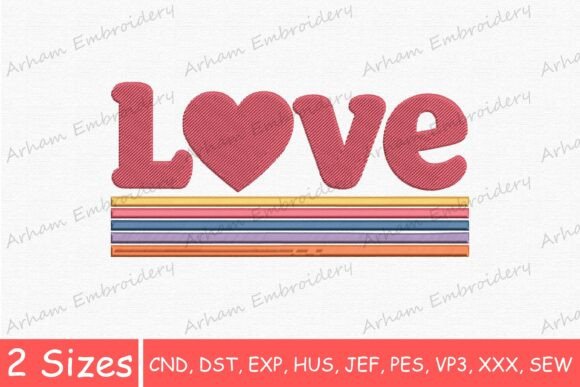
When I opened the Retro Valentine Love Heart file and previewed it on my embroidery software, I didn’t see “Valentine’s Day” as a holiday theme—I saw a quiet, confident mood. It’s not hearts-with-roses or glittery script. It’s clean-lined, slightly asymmetrical, with gentle curves and subtle texture built into the satin stitch edges—just enough to echo vintage pressed paper valentines, not digital perfection. That’s its strength: it feels handmade *before* it’s even stitched. As a designer who’s reviewed hundreds of machine embroidery designs, I immediately knew this wouldn’t compete with busy backgrounds or overwhelm small items. It leans into simplicity—and does it well.
A Real Project Test: Embroidering It on a Linen-Cotton Tea Towel
Last week, I used Retro Valentine Love Heart on a set of kitchen towels for a local boutique’s Valentine’s launch. We chose natural linen-cotton blend—medium weight, lightly textured, no stretch. Hooped with medium-weight cutaway stabilizer and stitched in soft red and cream thread (no metallics), the result held up beautifully: crisp satin-stitched outlines, smooth fill areas without puckering, and zero thread breaks across 24 repeats. Customers responded strongly—not just to the heart itself, but to how *grounded* it felt. One buyer told me, “It doesn’t scream ‘holiday’—it feels like something my grandmother would’ve kept in a drawer.” That’s the sweet spot: nostalgic without being costumey, romantic without being saccharine.
Where It Shines (and Where It Needs Thought)
Retro Valentine Love Heart works exceptionally well for:
- Custom apparel: Sweatshirts, crewnecks, and lightweight denim jackets—especially when placed centered on the chest or left sleeve. Its moderate density avoids stiffness, and the shape reads clearly even at 3.5"–4".
- Embroidered patches: Clean edges and balanced negative space make it ideal for iron-on or sew-on patches—no fraying corners, no detail loss during cutting.
- Baby embroidery: On organic cotton onesies or burp cloths, it reads gently—no sharp points, no tiny elements that risk snagging or stitching poorly on thin fabric.
- Tote bag design: At 4.2", it anchors the front pocket or lower corner without dominating. Paired with minimal text (“Love You More”), it elevates a handmade product instantly.
- Holiday embroidery for small shops: Perfect for limited-edition Valentine’s merchandise—aprons, pillow covers, tea towels—that sell beyond February because the aesthetic isn’t time-bound.
Use With Care On These Surfaces
This isn’t a one-size-fits-all design—and that’s honest, not limiting. Proceed thoughtfully with:
- Stretchy fabrics like knits or ribbed t-shirts: Use tear-away + topping, and reduce stitch speed. The satin stitch borders can distort if tension isn’t dialed in.
- Dark or heavily textured fabrics: Test contrast first. On charcoal fleece or burlap, the inner details soften. Consider simplifying thread colors to two high-contrast tones instead of blending.
- Curved surfaces like caps or baby beanies: The shape holds up, but avoid placing it too close to the crown seam. A 3" version (if available) is safer than scaling down aggressively.
- Frequent-wash items like baby blankets or kitchen linens: Confirm your stabilizer choice supports long-term wear. Cutaway > tear-away here—even if it takes extra trimming.
What It Adds to Your Handmade Product—Beyond the Stitch
Retro Valentine Love Heart quietly lifts perceived value. It doesn’t shout “handmade”—it *whispers* intention. For Etsy sellers, that translates to higher conversion on listings where photography shows context: the heart on a folded towel beside mason jars, or stitched on an unbleached cotton apron hanging in a sunlit kitchen. Buyers trust consistency, and this design delivers it across projects—whether you’re making personalized gifts, small shop products, or wholesale embroidered goods. It also pairs seamlessly with other vintage-inspired design assets (think simple florals or serif monograms), helping craft businesses build cohesive seasonal collections without visual fatigue.
Practical Designer Notes Before You Stitch
Before adding Retro Valentine Love Heart to your next embroidery project, do these five things:
- Test on scrap fabric—same type, same stabilizer, same thread. Watch how the satin stitch settles on your chosen surface.
- Check thread color contrast on both light and dark mockups. What reads softly on white may disappear on navy.
- Review stitch density in your software. If it’s dense near the center curve, consider reducing density by 5–8% for breathable fabrics.
- Confirm hoop size compatibility. This design fits comfortably in a 4x4 hoop—but verify before hooping a curved garment panel.
- Inspect small details at 200% zoom: Are there any floating stitches? Does the heart’s point taper cleanly? Tiny flaws magnify in production.
And always—always—check licensing terms. If you plan to sell finished products or use it in digital embroidery files for resale, confirm commercial use is permitted. Many designers forget this step until a platform flags their listing.
Final Thought: A Design That Ages Well
Retro Valentine Love Heart won’t trend hard and fade fast. It’s not chasing algorithmic virality—it’s built for repeat use, thoughtful gifting, and brand longevity. Whether you’re an embroidery file creator building a curated collection, a craft business owner refreshing holiday inventory, or a hobbyist stitching heartfelt gifts, this design earns its place not through flash, but through fidelity: to craft, to mood, and to the quiet confidence of a well-considered line.