Cute Crocodile Embroidery Design
First Impression: Playful, Approachable, and Instantly Recognizable
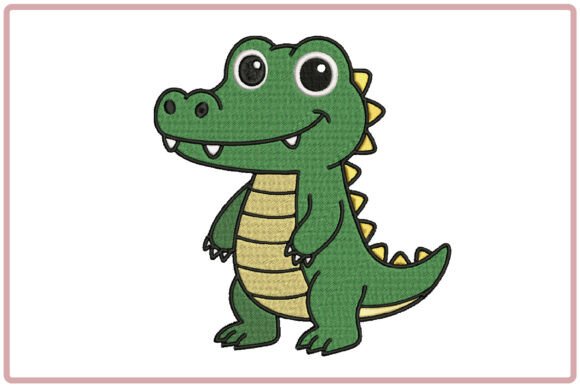
As an embroidery designer who’s prepped over 200 craft fair booths in the past decade, my gut reaction to Cute Crocodile Embroidery Design is immediate: this is a smile-getter. It’s not fierce or realistic—it’s cheerful, simplified, and intentionally friendly. The “mirror image” detail suggests thoughtful symmetry for balanced placement on items like tea towels or pillow covers. With its green body and light yellow accents, it lands squarely in the soft, nature-inspired nursery aesthetic—but without feeling overly babyish. That versatility is gold for handmade sellers juggling multiple audiences: new parents, animal lovers, eco-conscious shoppers, and gift buyers seeking lighthearted charm.
Where It Shines: Craft Fair & Market-Ready Product Pairings
Tote bags: A standout. Positioned near the top corner or centered on the front panel, Cute Crocodile Embroidery Design reads clearly from three feet away—critical when customers are scanning dozens of booths. Its compact scale works beautifully at 3–4 inches wide, avoiding bulk while still commanding attention.
Aprons and tea towel embroidery: Ideal as a subtle focal point above the pocket or centered on the lower third. On textured kitchen towels, the design’s clean outlines hold up well—if stitched with appropriate stabilizer—and the green/yellow palette pops against natural linen or cream cotton.
Embroidered patches: This is where Cute Crocodile Embroidery Design becomes a repeat-seller. Its cheerful shape and minimal internal detail make it highly scalable down to 2 inches without losing legibility. Perfect for attaching to denim jackets, backpacks, or baby bibs—especially for Etsy sellers offering custom patch bundles.
Pillows and small pouches: As a single motif on a neutral fabric, it adds personality without overwhelming. On 12×12 inch pillow covers, it feels intentional and boutique-quality—not “cute overload.” For fabric pouches (think drawstring gift bags or toiletry cases), it serves as both branding and charm.
Caps and curved surfaces: Use caution here. The mirror-image structure helps, but tight curves distort stitch alignment. Best reserved for structured caps with flat front panels—or skip entirely unless you’ve tested on scrap first.
What Makes It Sell: Real Booth & Online Behavior
In person, Cute Crocodile Embroidery Design performs like a quiet magnet. It doesn’t shout—but it invites touch, conversation, and photo-sharing. Parents pause, point, and say, “Oh, that’s sweet!”—a strong emotional trigger at craft fairs. Online, it photographs cleanly: no tiny linework to blur, no dense fill areas that look muddy in natural light. As a digital embroidery file, it translates well into printable mockups for Etsy listings, helping buyers visualize it on real products before purchasing.
For small shop owners building brand consistency, this design supports cohesion across product lines—same motif, different applications. It feels intentional, not random. And because it’s not overly trendy (no glitter fonts or seasonal themes), it remains relevant year-round, supporting batch production without risk of quick obsolescence.
Production Reality Check: What You Must Test Before Booth Day
Don’t assume this design will stitch flawlessly on your first try. Here’s what I check every time:
- Stitch density: Even “cute” designs can pack too many satin stitches into small eyes or mouths. If the original file has heavy fill in the crocodile’s grin or nostrils, it may pucker on lightweight cotton—test on scrap with your usual stabilizer stack.
- Fabric texture: Avoid using Cute Crocodile Embroidery Design on heavily textured terry cloth or looped towels without extra cutaway stabilizer. The mirror-image outline relies on crisp edges—those vanish fast on uneven surfaces.
- Thread contrast: Green-on-khaki? Lovely. Green-on-forest-green? Nearly invisible. Always verify thread colors against your base fabric before stitching a full run.
- Hoop size & spacing: Confirm the design fits comfortably in your most-used hoop. If it requires frequent re-hooping mid-stitch (e.g., on large tote bags), factor in extra time per item.
- Commercial licensing: Since this is intended for craft fair products and finished handmade goods, double-check whether the digital embroidery file includes commercial use rights. Many designers restrict resale of embroidered items—don’t risk a takedown after investing in materials.
Design Notes Every Embroiderer Should Follow
Before cutting fabric or loading your machine:
- Run a test stitch on scrap fabric matching your final product’s weight and weave.
- Compare thread colors under both daylight and booth lighting—yellow can wash out fast under warm LEDs.
- Review spacing between elements: Does the crocodile’s tail clear the edge of your hoop? Will it fit centered on a 6×6 inch market bag?
- Create at least one real mockup—a stitched tote bag or tea towel—not just a digital preview. Real-world drape changes everything.
- Check how the design reads at half-size: if you plan to offer mini versions (e.g., on keychains), confirm clarity before scaling down.
- Confirm stabilizer type: lightweight cutaway for knits, tear-away for stable wovens, and fusible + cutaway for nap-free fabrics like velvet or fleece.
Final Thought: A Strategic Nursery-Era Staple
Cute Crocodile Embroidery Design isn’t just another animal motif—it’s a considered, market-tested asset for embroidery business owners who value both charm and practicality. It bridges nursery sensibility with broader handmade appeal, avoids visual fatigue, and scales reliably across product types. In a crowded craft fair aisle, it won’t scream—but it will linger in memory, invite connection, and convert browsers into buyers. For Etsy sellers building a cohesive catalog, boutique makers curating giftable collections, or Cricut crafters expanding into machine embroidery, this is the kind of design that earns repeat orders, social tags, and word-of-mouth referrals. Just remember: test, tweak, and trust your instincts—not the file name alone.