Embroidery: Bold, Clean, Craft-Fair Ready
As an embroidery designer who’s packed, stitched, and sold at over 47 craft fairs—and shipped thousands of handmade products to Etsy buyers—I opened Embroidery with one question: “Will this stop someone mid-aisle?” The answer? Yes—but only if you use it right.
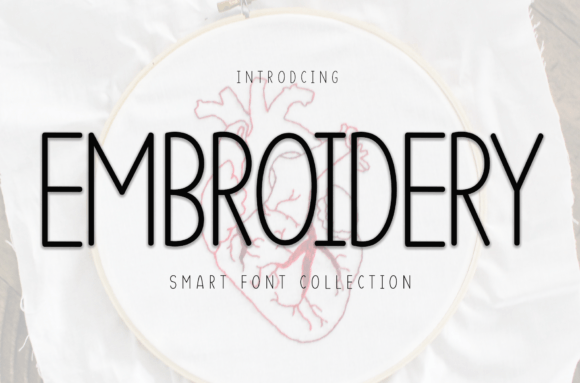
At first glance, Embroidery reads as confident, modern, and quietly premium. It’s not playful or whimsical—it’s a slab serif with grounded weight, clean terminals, and generous spacing. Think elevated farmhouse meets boutique stationery—not vintage script, not tech-minimalist, not retro diner. It feels substantial enough for a linen tea towel but refined enough for a monogrammed pillow cover. That balance is rare, and it’s why Embroidery belongs in your core design assets.
Where Embroidery Shines on Craft Fair Products
Tote bags: A standout. Large-scale Embroidery lettering (8–10” wide) anchors the front panel beautifully—especially on natural canvas or oat-colored cotton. Customers notice it from six feet away, and it photographs cleanly for Instagram and Etsy listings. Avoid cramming more than one word; its strength is in presence, not density.
Aprons and tea towels: Perfect for single-word branding (“Bake,” “Brew,” “Gather”) or short shop names. Its slab serifs hold up against kitchen steam, washing, and repeated folding. On textured flour-sack towels, use medium-density stitching and a tear-away + cut-away stabilizer combo—Embroidery’s thick strokes won’t ghost or blur like thinner fonts might.
Embroidered patches and small pouches: Use with caution. At under 2.5”, letterforms begin to soften—especially the interior counters of “e,” “a,” and “o.” If you’re making iron-on or sew-on patches for resale, test stitch a full set at 2”, 2.5”, and 3”. You’ll likely find 2.75” is the sweet spot for clarity without excessive stitch density.
Caps and curved surfaces: Not ideal for full-word front caps unless scaled generously (minimum 4.5” width). The even stroke weight helps, but curves distort tight kerning. Better used as a clean, centered back-strap label (“Est. 2023”) or subtle side-embroidery on structured fabric.
Pillow covers and market bags: This is where Embroidery earns its keep. Centered, medium-large, on heavyweight linen or duck cloth? Instant sophistication. Buyers associate that crisp, grounded lettering with quality craftsmanship—not fast-printed decor. It elevates a $28 pillow cover into a giftable, boutique-worthy item.
What Makes Embroidery Sell—And What Holds It Back
Embroidery works because it’s instantly legible, commercially versatile, and emotionally neutral—meaning it adapts to your brand voice instead of imposing one. A rustic bakery, a modern ceramic studio, or a botanical soap maker can all use it without visual whiplash.
But here’s the reality check: Embroidery isn’t forgiving on dark fabric without high-contrast thread. Navy + charcoal gray? Fades fast. Always test thread colors on your exact fabric—especially with matte or napped textiles. And avoid ultra-dense fills in tight spaces; that’s where stitch density spikes, hoop time climbs, and thread breaks multiply.
It also doesn’t shrink gracefully. Below 1.75”, spacing collapses, serifs merge, and the “slab” character blurs into a blocky silhouette. If you’re listing digital embroidery files or printable mockups, be transparent about minimum recommended sizes—your buyers will thank you (and leave better reviews).
Booth-Tested Practical Notes for Handmade Sellers
Before cutting fabric or loading hoops, do these six things:
- Test stitch Embroidery on scrap fabric—same weight, same dye lot, same finish as your final product.
- Check thread contrast under both daylight and booth lighting (craft fair tents love to wash out subtle tones).
- Review letter spacing manually—even if the font file looks balanced, digitizing can tighten or loosen tracking on curve transitions.
- Confirm your hoop size accommodates the widest intended layout; don’t force a 9” word into a 6” hoop and risk distortion.
- Inspect stitch density in tight areas (like the crossbar of “H” or inner loop of “e”)—adjust underlay or reduce fill angle if needed.
- Use the right stabilizer: medium-weight cut-away for knits, tear-away + light cut-away for stable wovens, and fusible + tear-away for tea towels with texture.
Always create at least one real mockup—not just a digital preview. Hold it in your hand. Drape it on a shelf. Step back 10 feet. Does it read? Does it feel intentional? Does it look like something a customer would pause for, pick up, and imagine in their home?
For Etsy Sellers & Digital Designers
If you’re selling Embroidery as a digital embroidery file or pairing it with printable mockups, highlight its slab serif reliability in listings. Mention compatibility with common machines (Brother, Janome, Bernina), note recommended fabric types, and clarify commercial licensing terms—because yes, you’ll need confirmed commercial rights before selling finished embroidered products using this font.
Bundle it smartly: pair Embroidery with three ready-to-stitch phrases (“Hello Friend,” “Made With Love,” “Small Batch”) and include PDF care tags. That turns a font into a small shop product system—something your fellow makers will buy again and again.
Bottom line? Embroidery isn’t flashy—but it’s dependable, distinctive, and deeply saleable when matched to the right product, fabric, and context. It won’t shout, but it will command attention. And in a sea of cursive scripts and overworked novelty fonts at your next craft fair? That quiet confidence is pure gold.