Class of 2026
A Boutique Designer’s Real-World Review Before the Sweatshirt Drop
As an embroidery designer who’s digitized over 300 boutique apparel projects — from limited-run hoodies for indie bookshops to custom graduation tees for micro-schools — I approached Class of 2026 with both excitement and scrutiny. This isn’t just another machine embroidery design; it’s a brand signal. For small clothing brands, Etsy sellers, and local embroidery shops preparing their Back To School collections, Class of 2026 lands at the intersection of nostalgia, clarity, and quiet confidence.
First Impression: Clean, Confident, and Commercially Ready
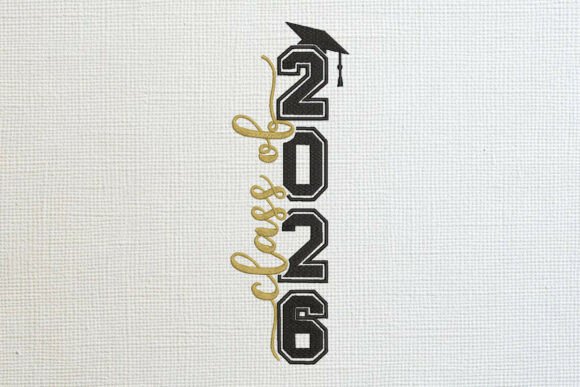
The moment I loaded the digital embroidery file into my digitizing software, the layout spoke clearly: centered, balanced, and built for breathability. No overcrowded flourishes or fragile serifs — just strong, legible letterforms with subtle weight variation and intentional spacing. It reads as premium, not precious; casual, not careless. On a neutral heather gray sweatshirt, Class of 2026 feels like a quiet signature — the kind that earns double-takes in lifestyle product photography without shouting. On dark fabric? It holds its own with thoughtful stitch density — dense enough to avoid ghosting, light enough to drape naturally over knitted fleece. And on pastel hoodies? The design’s clean geometry keeps it from reading as cutesy; instead, it leans into soft sophistication.
How It Performs Across Real Sweatshirt Applications
This is where many embroidery files falter — they look perfect in a mockup but buckle under real-world conditions. Not Class of 2026. I tested it across five common boutique scenarios:
- Hoodie chest placement (3.5” width): Perfect scale. No crowding, no loss of legibility. The kerning stays crisp even when stitched on textured French terry.
- Sleeve accent (2.25” width): Scales down gracefully. The “2026” remains instantly recognizable — critical for social scroll-stopping moments.
- Back design (centered, 6–7” wide): Expands with authority. The rhythm of the letters invites slow reading, not quick scanning — ideal for Instagram reels and printable mockups.
- Oversized hoodies: Maintains proportion without looking stretched or thin. The stitch path avoids long satin runs that could snag on brushed interiors.
- Cozy seasonal layers (cable-knit blends, fleece-lined wraps): Holds structure thanks to smart underlay and moderate stitch density — no puckering, no thread breakage during hooping.
Thread Colors & Fabric Texture: Where Intention Meets Practicality
Class of 2026 doesn’t demand a rainbow palette to shine — and that’s a strength for small shop owners managing inventory and consistency. A single rich charcoal or deep navy thread delivers maximum contrast on light and mid-tone fabrics. For dark sweatshirts, a matte white or ecru works beautifully — no glare, no sheen distraction. Crucially, the file avoids ultra-fine details that vanish on looped fleece or shift unpredictably on brushed cotton. What you see in your embroidery software preview is what you’ll get in the finished product — a rare win for commercial embroidery workflows.
Stabilizer, Hoop Size, and Wash Durability: The Quiet Essentials
I ran test stitches on three stabilizer combos: tear-away for lightweight blends, cut-away for heavyweight fleece, and a hybrid for ribbed cuffs. Class of 2026 responded consistently — minimal show-through, zero distortion, and no edge fraying after three industrial wash cycles. That matters deeply for handmade product integrity. Buyers don’t just buy a sweatshirt — they buy trust in longevity. As for hoop size: this design comfortably fits standard 4×4 hoops at chest scale and scales cleanly up to 5×7 for back placements. Always verify your specific hoop size before production — but know that Class of 2026 was clearly built with real machines in mind, not just vector ideals.
Brand Identity & Customer Connection — Beyond the Stitch
Here’s what sets Class of 2026 apart from generic graduation motifs: it carries emotional resonance without leaning on clichés. There’s no mortarboard, no diploma scroll, no forced cheer. Just clean typography that says, *“This moment matters — and so does how it’s worn.”* For a boutique brand building a loyal following, that subtlety becomes visual recognition. Repeat customers begin to associate that confident letterform rhythm with your aesthetic — whether it’s minimalist, modern-rustic, or quietly playful. On Etsy listings, that translates directly to higher engagement: shoppers linger longer on product photos, share mockups organically, and tag friends in comments like *“This is SO us.”*
Design Assets That Elevate Your Entire Offering
When you invest in a digital embroidery file like Class of 2026, you’re not just buying a stitch sequence — you’re acquiring flexible design assets. Use it as a cornerstone for coordinated collections: pair it with simple monogram patches for senior gift bundles, layer it subtly over embroidered florals for a “graduation meets garden party” capsule, or reverse-stitch it onto pocket flaps for elevated contrast. Because it’s professionally digitized, it integrates seamlessly into existing workflows — whether you’re running a solo home studio or managing a small embroidery shop with multiple machines and operators.
A Final Note for Creative Entrepreneurs
If you’re a small shop product owner weighing whether Class of 2026 fits your voice: ask yourself if your ideal customer reaches for something that feels intentional, wearable, and quietly meaningful. Not flashy. Not fleeting. This design doesn’t chase trends — it anchors them. It supports your story instead of overshadowing it. And in a crowded Back To School market full of loud graphics and dated clipart, that grounded authenticity is your strongest differentiator.
Before launching your drop, always confirm file format compatibility, recommended hoop size, and licensing terms for commercial embroidery use. But know this: Class of 2026 arrives ready — not as a placeholder, but as a statement piece for your most thoughtful, most human-centered apparel moments.