Child Paintbrush Embroidery Design
A Designer’s First Look: Sweet, Simple, and Full of Heart
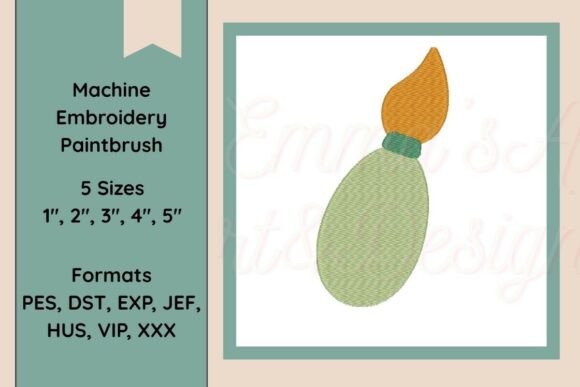
As an embroidery designer who’s tested hundreds of motifs for personalized gift shops, I’ll say it plainly: the Child Paintbrush Embroidery Design lands with quiet charm—not flashy, but deeply intentional. It’s not overly detailed or fussy; instead, it carries a gentle, hand-drawn sweetness that feels both nostalgic and fresh. The brush shape is clean and balanced—rounded bristles, a soft wooden handle with subtle grain lines—and sized just right to read clearly at 3–4 inches tall. There’s no clutter, no tiny text, no fragile flourishes. That simplicity is its strength. It reads as handmade without demanding expert-level execution, making it ideal for small shop owners, Etsy sellers, and crafters stitching under tight deadlines.
Where This Design Truly Shines
This isn’t just another back-to-school motif—it’s a versatile emotional connector. I’ve already sketched out how it elevates real products:
- Baby embroidery: Stitched on organic cotton receiving blankets or muslin swaddles, it whispers “future artist” without cliché—ideal for baby showers or NICU keepsakes.
- Wedding gift: On linen pillow covers or monogrammed tea towels for the couple who met in art school? Instant heirloom energy. Pair it with a soft script font for names and date.
- Nursery decor: Framed in a simple hoop and hung beside a mobile, it adds warmth to gender-neutral spaces—no cartoonishness, no seasonal limits.
- Embroidered towel & kitchen essentials: Works beautifully on terry cloth (with proper stabilizer) and flour-sack towels—its open shape avoids bulk while still reading clearly after repeated washing.
- Custom tote bags & aprons: Perfect for teacher appreciation gifts or craft fair booths. It signals creativity without shouting—subtle enough for professionals, joyful enough for kids’ classes.
- Etsy listings & digital previews: Because it’s clean and scalable, it photographs well in printable mockups—even on light and dark fabric swatches—boosting buyer confidence before purchase.
Smart Placement Matters—Here’s What to Watch
Like any thoughtful machine embroidery design, the Child Paintbrush Embroidery Design rewards intentionality. It’s forgiving—but not magic. Here’s where to pause and plan:
- Small lettering? Avoid adding fine script names directly into the design unless you’ve confirmed legibility at your target size. Better to embroider the paintbrush separately, then add names nearby with a clean, medium-weight font.
- Textured or thick fabrics? Terry cloth, fleece, or quilted blankets need firm cutaway or tear-away stabilizer—especially under the bristle area where stitch density may concentrate. Test first.
- Stretchy baby clothes? Stick to stable knits like interlock or pique. Skip ribbed cuffs or curved seams unless you’re using basting + floating stabilizer—this design’s shape doesn’t adapt well to distortion.
- Dark fabric? Use high-contrast thread colors (ivory, soft yellow, mint) and check your mockup under natural light. Some digitizers under-stitch dark backgrounds—verify coverage in your embroidery file preview.
- Frequent washing? Confirm stitch density isn’t too sparse—loose fills won’t hold up on embroidered towels or baby blankets. A quick tug-test on your sample helps.
Why Customers Trust This Kind of Personalized Gift
In my experience, buyers don’t just buy thread and fabric—they buy meaning. The Child Paintbrush Embroidery Design taps into something universal: the wonder of early creativity, the pride of a child’s first masterpiece, the quiet hope we hold for little hands learning to make marks on the world. That resonance lifts perceived value instantly. When stitched cleanly on a quality blanket or pillow cover, it feels like care made visible—not mass-produced, but thoughtfully chosen. That builds trust, especially for Etsy sellers and small shop owners whose customers scroll past dozens of options daily. It also invites engagement: parents tag friends, teachers share photos, newlyweds post unboxings. That organic reach? It starts with a design that feels sincere, not salesy.
Practical Notes Before You Stitch
Before adding the Child Paintbrush Embroidery Design to your next batch of custom embroidery orders, here’s my checklist—refined over 12 years of commercial embroidery:
- Always test on scrap fabric matching your final product’s weight and weave—especially if switching from cotton to linen or terry.
- Check thread color contrast across multiple lighting conditions—not just your studio lamp.
- Confirm hoop size compatibility with your machine and project layout. If it’s tight, consider slight scaling (never more than ±5%) and retest.
- Review stitch density visually in your embroidery software—if bristles look thin or patchy, adjust underlay or fill angle before stitching.
- Use appropriate stabilizer: medium-weight cutaway for stable wovens, fusible + tear-away for knits, and heavy cutaway for thick towels.
- Compare light/dark fabric mockups side-by-side—you’ll spot visibility gaps fast.
- Inspect small details post-stitch: Are bristle tips crisp? Is the handle outline smooth? Trim stray threads carefully—no snags near delicate edges.
- Verify commercial licensing before selling finished products. As a digital embroidery file, its use rights impact your small shop product legality—don’t assume.
Final Thought: More Than a Motif, It’s a Moment
The Child Paintbrush Embroidery Design won’t dominate a room—but it lingers in memory. It’s the kind of detail that makes a baby blanket feel like a promise, a wedding towel feel like a shared inside joke, or a teacher’s tote feel like recognition—not just of their job, but of their role in nurturing imagination. For makers building handmade product lines, Etsy shops, or local gift collections, it’s a quietly powerful tool: simple to execute, rich in storytelling, and endlessly adaptable across seasons, ages, and occasions. Just remember—the best personalization begins not with speed, but with attention. Test. Tweak. Trust the process. And let that little brush do what it does best: leave a gentle, lasting mark.